- Hemp oil or CBD oil?.
- What is hemp oil used for?.
- What is cannabidiol.
- CBD and THC: the real difference.
- How it is obtained.
- The endocannabinoid system.
- Full spectrum, broad spectrum and isolate.
- How to read the label.
- Certificate of analysis (COA).
- Legal framework.
- What we actually sell.
- Frequently asked questions.
- Sources.
Hemp oil and CBD oil sound similar, but they are not the same product. Hemp seed oil is cold-pressed from the seeds and used as an edible oil, whereas CBD oil contains a plant extract with a declared amount of cannabidiol (CBD) in milligrams.
Cannabidiol (CBD) is one of more than a hundred substances called cannabinoids that occur naturally in hemp (Cannabis sativa L.). After THC it is the most studied cannabinoid and, unlike THC, it is not psychoactive.
This guide explains what CBD is, how it differs from THC and from hemp seed oil, how it is obtained, and how to read a label and a certificate of analysis. You will not find claims here about what CBD “does” for health — that is not an omission, but a legal obligation, explained below.
Hemp oil or CBD oil?
Both are obtained from hemp, so in shops both products are often called “hemp oil”. The difference lies in the part of the plant they come from and in whether they contain cannabidiol:
| — | CBD oil | Hemp oil (seeds) |
|---|---|---|
| Part of the plant | Flowers and leaves | Seeds |
| Contains cannabidiol | Yes, in the declared concentration | Practically none |
| Process | Extraction (most often supercritical CO2) | Cold pressing |
| Price | Considerably higher | Low |
What is hemp oil used for?
Hemp oil, that is, hemp seed oil, is above all an edible oil. It is most commonly used:
- in the kitchen, cold: for salads, sauces and ready meals. Because of its low smoke point it is not suitable for frying.
- in cosmetics: as a carrier oil for skin and hair care.
- as a carrier in CBD oil: in our bottles, too, the hemp extract is dissolved in cold-pressed seed oil.
Seed oil is rich in polyunsaturated fatty acids, linoleic (omega-6) and alpha-linolenic (omega-3). Once opened, it should be kept in the refrigerator, in a dark bottle, because it spoils quickly when exposed to heat and light. It is not a medicine and does not state an amount of CBD, so it is not a substitute for CBD oil.
What is cannabidiol
Cannabidiol was isolated in the 1940s, and its structure was described in 1963 by the group of Raphael Mechoulam at the Hebrew University of Jerusalem.
It is found in large amounts in industrial hemp — varieties with a high CBD content and a very low THC content. In the EU, only varieties from the Common Catalogue of Varieties of Agricultural Plant Species may be grown.
CBD and THC: the real difference
Both molecules have the same molecular formula (C21H30O2), but a different arrangement of atoms.
| — | CBD (cannabidiol) | THC (tetrahydrocannabinol) |
|---|---|---|
| Psychoactivity | No | Yes |
| Role in industrial hemp | The main constituent | Only in traces |
| CB1 receptors | Weak affinity, indirect | Binds directly to CB1 in the brain |
| In Hemp Farms products | Content confirmed by analysis (COA) for every batch | THC < LOQ (COA) |
Many studies presented as being “about CBD” actually use preparations that also contain THC.
How it is obtained
- Supercritical CO2: the industry standard, with no solvent residues.
- Ethanol: effective, but requires careful removal of the solvent.
- Hydrocarbon solvents: the cheapest, with the highest risk of residues.
The extract is then diluted in a carrier oil, most often hemp seed oil or MCT.
The endocannabinoid system
Described in the 1990s, it is present in all mammals and consists of endocannabinoids (for example anandamide and 2-AG), receptors (CB1 mainly in the central nervous system, CB2 mainly on immune cells) and the enzymes that break them down.
Describing a biological system is not the same as proving that a product affects health: that would require clinical trials in humans.
Full spectrum, broad spectrum and isolate
| Type | Contents |
|---|---|
| Full spectrum | CBD + other cannabinoids (CBG, CBN, CBC) + terpenes + trace THC |
| Broad spectrum | Similar, but without THC |
| Isolate | Pure crystalline cannabidiol |
Hemp Farms oils are full spectrum. The analysis of every batch shows THC < LOQ: THC is so low that even laboratory analysis cannot quantify it (below the limit of quantification) — which indicates a very clean oil. The certificates are published on the Certificate of analysis page.
How to read the label
A percentage means nothing without a volume. 10% in 10 ml is 1,000 mg of cannabinoids; the same percentage in 30 ml is 3,000 mg. Always compare the total milligrams and the price per milligram.
| Strength | Volume | Total cannabinoids |
|---|---|---|
| 5% | 10 ml | 500 mg |
| 10% | 10 ml | 1,000 mg |
| 20% | 10 ml | 2,000 mg |
| 30% | 10 ml | 3,000 mg |
| 50% | 10 ml | 5,000 mg |
Certificate of analysis (COA)
A study in JAMA (Bonn-Miller et al., 2017) showed that many CBD products sold online were inaccurately labelled, some with undeclared THC.
The certificate of analysis for the exact batch is the only real check: the batch number, date and laboratory, and the full cannabinoid profile — CBD, CBG, CBN, CBC and THC — measured by an independent laboratory. A full profile means the analysis was done properly and nothing is hidden. Hemp Farms publishes such a certificate for every batch on its certificates page.
Legal framework
The status of hemp extracts as a “novel food” in the EU is still under assessment, and national rules may change.
What we actually sell
Hemp oils: strengths from 5% to 50%, full spectrum extract, an analytical report for every batch. The composition is described on the CBD oil page and in the shop. Our products are not medicines, and we do not attribute to them any property of preventing, alleviating or treating disease — in accordance with Regulation (EC) No 1924/2006.
Frequently asked questions
What is cannabidiol (CBD)?
A cannabinoid naturally present in hemp, the most studied after THC. It is not psychoactive.
Does CBD cause a “high”?
No. Cannabidiol does not cause the psychoactive effect of THC.
Is hemp oil the same as CBD oil?
No. Hemp oil is pressed from the seeds and contains practically no cannabinoids, whereas CBD oil is obtained by extraction from flowers and leaves and states the amount of cannabidiol in milligrams.
What does the percentage on the label mean?
It only makes sense together with the volume: 10% in 10 ml is 1,000 mg.
How should CBD oil be stored?
At room temperature, protected from direct light, in a tightly closed original bottle.
Read more
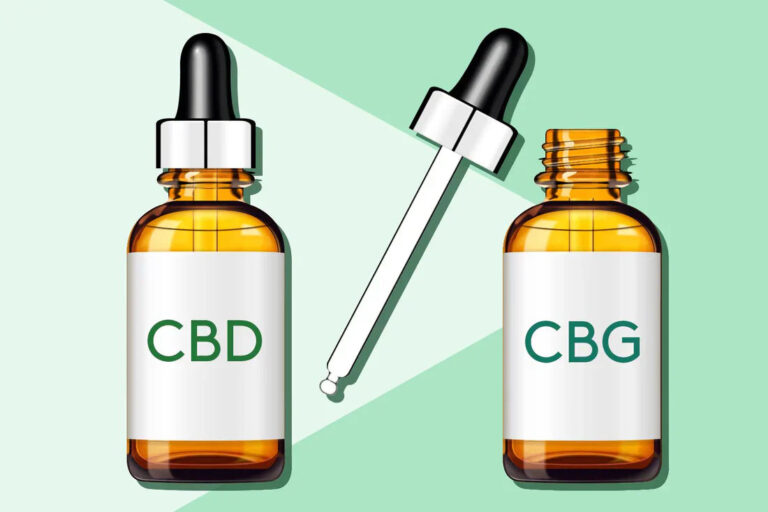
- What is CBG? — another cannabinoid
- Individual 10 ml bottles — our range and composition
Certificates of analysis for all strengths: Certificate of analysis.
Sources
- Mechoulam R., Shvo Y. — Hashish I: The structure of cannabidiol, Tetrahedron, 1963.
- World Health Organization — Cannabidiol (CBD) Critical Review Report, 2018.
- Bonn-Miller M.O. et al. — Labeling Accuracy of Cannabidiol Extracts Sold Online, JAMA, 2017.
- Regulation (EC) No 1924/2006 on nutrition and health claims made on foods.
- European Commission — Common Catalogue of Varieties and the novel food catalogue.
Prepared by the Hemp Farms editorial team on the basis of the scientific literature listed at the end of the article. Last updated: .
This article is for general information only. It is based on publicly available sources and does not constitute a statement or promise by Hemp Farms. Our products are not medicines or pharmaceutical preparations and are not intended to treat, cure or prevent any disease.